|
|
| Home | Index | Museums | Blog | Authors | Site Map | About |
|
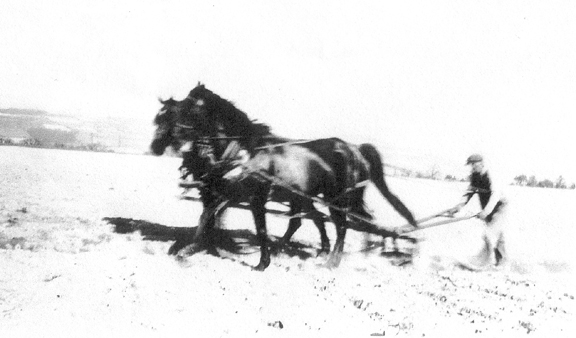
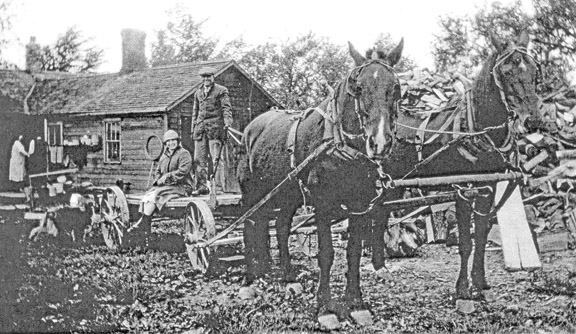
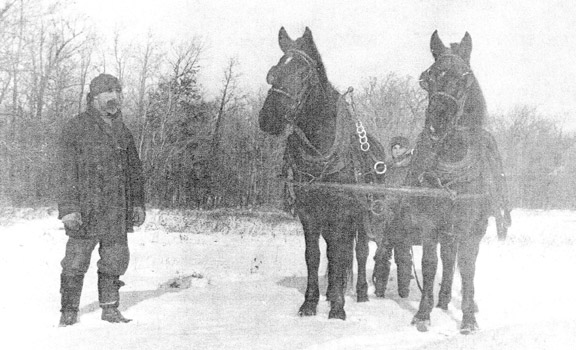
Stories of Mt. WashingtonMt. Washington WorkbyMartha and Bill TreichlerTable of ContentsChapter 4Farming prospered on Mt. Washington. The country was young, and many of the richer lands to the west were not yet part of our country. In the 1850’s, New York State was the bread basket of the country. Millard Roberts tells us, p. 526, that “In 1831 Hammondsport was a rival of Chicago…The year 1831 was an era of progress and great possibilities for Hammondsport. It had become not only a great grain market, but a favorable center of trade for a large farming community.” Ruth King says one of the attractions of Mt. Washington for the old settlers was the timber, which they considered superior to that down in the valley. Later, many farmers had sheep, and the Scofields trained horses for themselves and for other owners. |
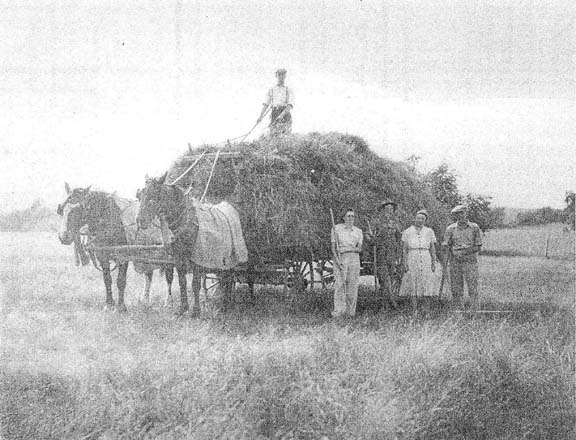
Made hay |
Fixed the manure spreader |
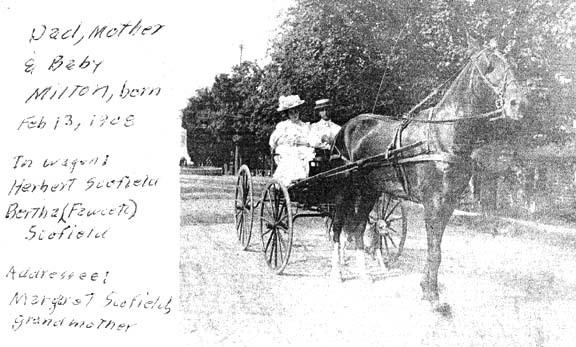
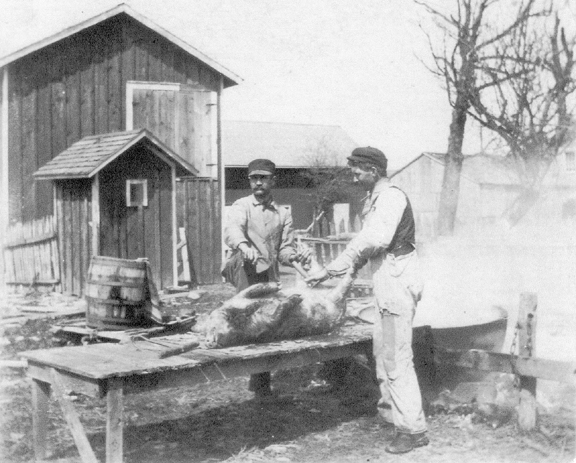
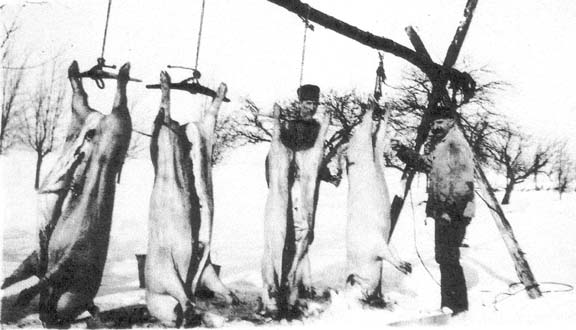
The women had their own jobs to do. The Scofield women were Bertha, her daughter Margaret, and her mother, Lillian Beck Fawcett, who visited frequently. Josephine Hutches had no daughter, but her mother came in times such as butchering, and her sister-in-law Clara Bell was a frequent, almost daily, helper.
Josie had a smaller family to cook for. This may be why she took more notice of nature. She mentions a rainbow, flocks of geese flying over, a beautiful winter day when it was four degrees above zero.
It seemed to me that the women had a less diverse list of jobs than their men, jobs that they did over and over:
Washed |
Mended |
They “did up work” daily (I think we can guess that this included washing dishes and pots and pans, putting away food, and cleaning up the kitchen, but what else, Bertha and Josie do not tell us.)
“Looked over beans,” presumably after picking and shelling them. They do not even mention the job that likely took up most of their time: cooking three big meals a day.
Josie grew flowers, if Bertha did so, she did not mention it. Josie paid more attention to the weather. Every day, she documents the weather and, when it was extreme, she gives the temperature. It was 105 degrees one hot summer day. One winter there was a run of near zero temperatures.
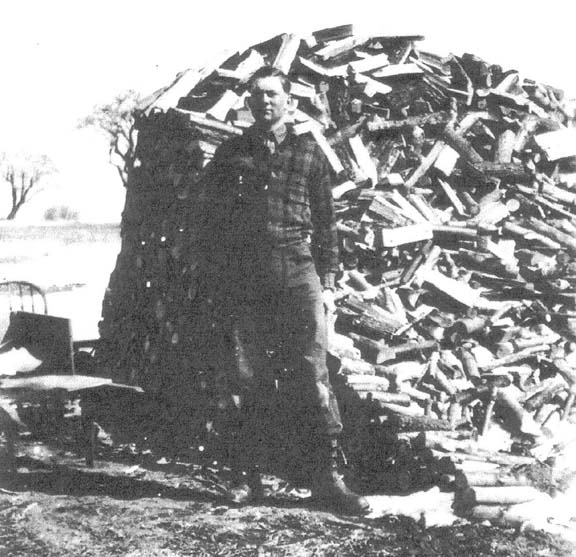
Bertha does not waste time on analyzing happenings, or in making value judgments. She does not even give her emotional reactions, when, for instance, her husband is hurt on November 7, her diary states, “Herb got hurt - Mar after Dr.” We are left not even knowing what happened. We know only that the doctor had to be called several times, and that by November 22, “Pop is better and walking a little” in Margaret’s writing, and by November 25, he was able to go upstairs. “Herb upstairs for the first.” She simply tells what the family did every day. The reader is left to draw his/her own conclusions. Josie was more likely to say what kind of illness a member of the family was afflicted with. In both families, feeling bad did not give one much time off, if any. Only serious injury or illness rated a doctor or time in bed. On December 26, Bertha writes, “Hob about sick with a sore throat.” On the 27th “Hob feels better.”, and on the 28th, “Hob and Lawrence got wood and we sawed in aft.”
There was some reciprocation between the men and women of the families. The men actually helped with some of the women’s work, mainly churning butter. The women helped with some of the men’s work, such as sawing wood or at times picking up potatoes, but since there were more men than women in the Scofield family, the men helped the women more than the other way around.
Entertainment was usually free. The main source of entertainment was visiting the neighbors. Neighbors and family frequently dropped in for a meal, often bringing food with them. Big celebrations were usually meals where everyone brought food. In the year of 1932, Bertha went to the “pictures” only once. They made ice cream once. Bertha cooked a ham for the big Scofield family picnic. She lists the name of every friend and family member who came to visit, and those who she visited. We do not know if they took vacations away from their farm. We do know that in 1927, Josie and Clarence Hutches spent a couple weeks in New York City with friends, sightseeing, going out to eat, and window shopping.
Bertha’s daughter Margaret wrote in the diary a few times for her mother, but we can tell only by the change in writing, and the change in reference to other family members.
Young Lawrence usually went to school, and Bertha lists almost daily, “Kids to school” or if Hob, the next to the youngest, stayed home to work, “Lawrence to school.” Frederick Charles was living elsewhere, we are not told where, but did come to visit, usually bringing food. Milton, the oldest, was old enough to travel to Buffalo by train to see his future wife, Vera. But the diary does not tell us that. Bertha simply says, “Milt to Buffalo” or “Milton took train to Buffalo.” We can guess this because family records show that Milton married Vera Dorothy Timms of Buffalo the next year, in October, 1933.
Even at nine years of age, Lawrence was expected to work. Bertha notes that “Lawrence drove a fork”. This is a complicated part of putting hay in a barn. The forkful of hay is pulled up from the hay wagon and delivered into the barn loft by a series of ropes and pulleys, pulled by a horse, and driving this horse requires judgment and skill.
I see Bertha’s laconic writing style as a result of how busy she was. I see her as a warmhearted, welcoming woman, who was always ready to welcome her family or friends with open arms and a good meal. She must have been a wonderful cook, because she so frequently had friends and family drop in for meals. She takes time to write down the name of every visitor. She documents the help neighbors give to her and to her men folks, and the help they give to the neighbors and to the community.
Both Bertha and Josie give us more than a catalog of their day-to-day work. They both picture a community of friends who enjoyed each other’s company, and who gave unstinting help to each other when they needed it.
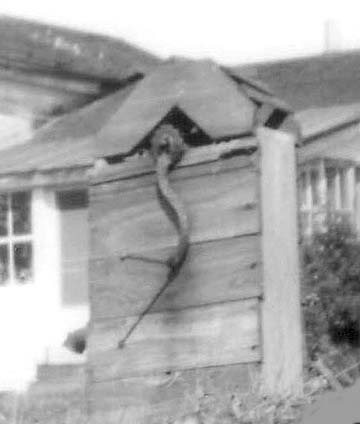
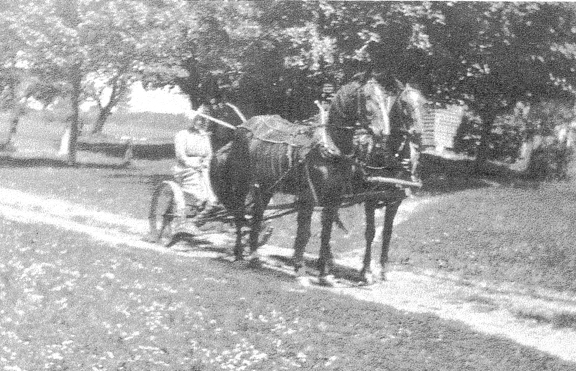
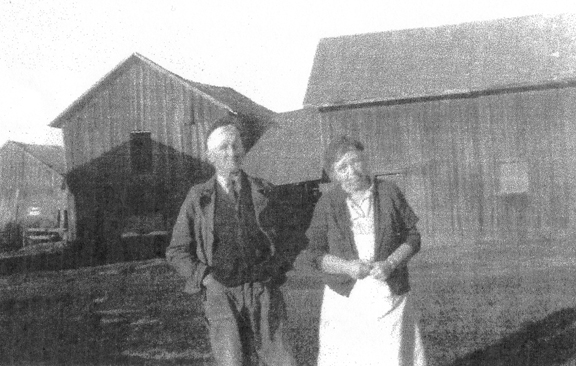
What a treasure these diaries are for us! They fill in for us the story told by the photos of their house and farm, and they add life to the genealogy their descendants have kept.